Tuesday, July 17, 2012

FW: Consumed by the Personal (Lutheran mysticism?)

Food for thought…


Feed: theology like a child
Posted on: Tuesday, July 17, 2012 7:25 AM
Author: infanttheology
Subject: Consumed by the Personal (Lutheran mysticism?)


Once in a while, lovers lose themselves in the other personThey are consumed*.  In a like manner, there are times that children desperately want to be embraced, surrounded and smothered by a parent's love.  This is normal part of the human experience.

There also is a Divine corollary.  This morning, as I was listening to the book of Ephesians, I was again struck by the immense meaning in words like these:

"I keep asking that the God of our Lord Jesus Christ, the glorious Father, may give you the Spirit of wisdom and revelation, so that you may know him better.  I pray that the eyes of your heart may be enlightened in order that you may know the hope to which he has called you, the riches of his glorious inheritance in his holy people, and his incomparably great power for us who believe… I pray that out of his glorious riches he may strengthen you with power through his Spirit in your inner being, so that Christ may dwell in your hearts through faith. And I pray that you, being rooted and established in love, may have power, together with all the Lord's holy people, to grasp how wide and long and high and deep is the love of Christ, and to know this love that surpasses knowledge —that you may be filled to the measure of all the fullness of God.  Now to him who is able to do immeasurably more than all we ask or imagine, according to his power that is at work within us…" (Eph. 1:17-19a, 3:16-20, NIV)

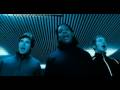
Huh.  Do I have any clue what Paul is talking about?  Note that Paul is writing this to Christians, so Christ already does dwell in their hearts by faith.  He is praying that they would know more of what they, in a very real sense, already have.  My mind was brought back to a 1998 song by the popular CCM group (heyday in 90s), DC Talk, called "Consume Me" (above, see the lyrics here).   Many years ago, and again this morning, I felt though the message in this song was my highest desire, and that which I hoped and longed for…

Are such thoughts really Christian?  What would Luther say?  Interestingly, near the beginning of his career as a Reformer, Martin Luther reprinted a couple of classical "mystical works", one by Johannes Tauler (1300-1361) and another mid-14th century work that came to be known as the German Theology Before this second book was adopted by the Radical Reformers and the Pietists, Luther – even after publishing his 95 theses – said of it: "Next to the Bible and St. Augustine, no book has ever come into my hands from which I have learned more of God and Christ, and man and all things that are."

If there is a valid expression of Christian mysticism though, what is its opposite?  It is to be consumed by the teachings of the one who comes as an Angel of Light, who insists that we are consumed by the impersonal Reality that is Divine – that we are Divine.  Persons who believe this need to know the right teaching: man does not ascend to realize his Divine nature, but the Creator-God rather descends into His creatures in love, and this is clearly revealed in His Son and the words He speaks, which are spirit and life.

* "sin is about consumption, in which the good of life is taken and hoarded. The first sin, which was one of consumption, created a situation in which man could be restored to communion with God only by a different kind of consumption [i.e. Holy Communion]" – quote found here.


View article...

FW: Lookin for a Buzz

Buzz…


Feed: Pastoral Meanderings
Posted on: Tuesday, July 17, 2012 5:00 AM
Author: noreply@blogger.com (Pastor Peters)
Subject: Lookin for a Buzz


A comment provided a link to some discussion of worship by Rich Mullins.  All in all, it is a helpful and interesting read from someone who has little in common with Lutheranism but who understands that entertainment worship is not the panacea that some claim for fixing all that ails the church.  You read it and you let me know what you think...


A very interesting thing happened in Wichita, Kansas, where a bunch of people who had been going to my church. They were, like, in the 20 year olds group - they had been going there for several years, and they went over to visit The Vineyard. And after they started visiting The Vineyard they decided to join The Vineyard. So they went forward, and the pastor said, "Why do you want to join our church?"
They said, "Well, because your worship is just so exciting to us."

And you know what the pastor of The Vineyard said? He said, "Go back to your old church. We don't particularly need you in this congregation because this is what will happen: You used to go to the church where you've been going for about three or four years because you got a buzz out of it. So suddenly you come to visit our church and we give you a better buzz so you decide that suddenly you no longer want to be faithful to the church where you're a member. Suddenly you're going to go to a church that gives you a better buzz. You know what's going to happen? You're gonna get used to the way that we do our worship service here and then you're not gonna get the buzz out of it and then you're going to go seek out another church. You'll end up being the member of about 50 dozen churches by the time you're 50 and you won't have helped anybody and you won't have grown because you will have gone from one goosebump feeling to another."

It worries me that in churches, the demand among people my age and younger, is that we make services more exciting to us. You don't go to church for excitement. That's why you go to movies. We go to church for fellowship. We go to church to be taught the Apostles' doctrine. And we go to church for the breaking of bread. We go to church for the sake of sharing all things. We don't go to church for thrills. And yet we find that part of our religious experience so boring that now suddenly you can't only have church with a piano and an organ. Suddenly you have to have an entire orchestra. All of the sudden, you have to have a rock combo. You have to have a backbeat in order to sing a hymn because we want a sensation.

And you know, what's very scary to me are people who come away from services where they've just been beat to death with a lot of sensationalism. And you know what? I enjoy those services, too. There's something really cool about being able to go to a church (I like to do it occasionally) where you get to clap your hands and you get to whirl around and you get to sing at the top of your lungs and you get to yell "amen" whenever you want and there's a rhythm in it. You know it's that whole, tribal kind of exciting thing.
But the danger is, we frequently mistake that sensationalistic wonderful experience for being a spiritual experience. It's not a spiritual experience. It's a fun experience and there's nothing wrong with it, but if we think that that's spirituality then we've missed the boat.

Please understand I'm not criticizing an exciting service. I'm merely saying that that is not the equivalent of a spiritual service. Does this make sense to everybody? We live in a world that says if it doesn't feel powerful, it's probably not real. Well, I have a feeling like it is real whether it feels real or not. I have a feeling that maybe sound doctrine is more important than goosebumps. I have a feeling that a real "holding all things in common" is more spiritual than a lot of dancing around and clapping your hands.


View article...

FW: How to Write a Truly Awful Worship Song

Sad, but true…


Feed: Cyberbrethren Lutheran Blog Feed
Posted on: Tuesday, July 17, 2012 8:54 AM
Author: Paul T. McCain
Subject: How to Write a Truly Awful Worship Song


Brought to you by Pastor Riley's blog, written by Stephen Altrogge, I present a quick "How To" on writing an awful worship song.

So you finally learned to play the guitar and now you're wondering,"How do I write a truly awful worship song?" You've come to the right place my friend. Here are some sure fire ways to write a truly horrible worship song.

Recycle A Love Song. Write a song for your girlfriend. When she breaks up with you, convert it into a worship song. Be sure to change all uses of "girl" or "baby".

Use Time Tested Rhymes. Make sure that you rhyme "love" and "above" at least twice. The song becomes doubly awful if you can also incorporate the word "dove". Example: "You sent your love from above, makes my heart feel like a pure white dove." You get the point.

Be Vague About Your Theology. Make sure to avoid any theology at all costs. Don't talk about atonement, wrath, or any other biblical concepts. You want your song to be all about feeling. Don't let the mind get in the way. Repeat after me: "Worship is a warm feeling, sort of like heartburn, only better."

Make the Song All About You.  The main point of your song should be your experiences and how God makes you feel. Don't bother with objective truth about God. I would suggest that you use the words "I" or "me" at least 12-15 times. For example, "I feel like singing, yes I feel like spinning, because You make me feel so good inside. Like it's my birthday, but more awesome."

Be Incredibly Poetic. If you can, muddy the waters with poetic phrases that don't make much sense. Example: "Your love is like a warm summer's breeze, washing over my heart like a crystal river."

Use Well-Worn Musical Progressions. If you can, keep your music and melody boring. I would suggest that you use no more than four distinct notes in a song, so that by the time someone is done listening to it they want to scream. A worship scream, but a scream nonetheless. It also helps if you use the chords G, C, and D over and over.

Defend Your Song Like It's Your Firstborn Child. Do not, I repeat, do not, let anyone make suggestions for improvement. Tell people that God laid the song on your heart. Tell people that you really want to preserve the artistic integrity of the song. Tell people that you already did the song at your campus ministry and that a revival broke out. Don't take advice from anyone.

There you have it. Seven ways to write a terrible worship song. You can thank me later.


View article...

Saturday, July 14, 2012

FW: Sample of the Lutheran Study Edition of the Apocrypha Available Now

Coming Soon…


Feed: Cyberbrethren Lutheran Blog Feed
Posted on: Saturday, July 14, 2012 6:05 AM
Author: Paul T. McCain
Subject: Sample of the Lutheran Study Edition of the Apocrypha Available Now


Take a look!

Great news, friends, a nice sampler from the Lutheran study edition of the Apocrypha is now available for download.

Just click this link, and a PDF file will download.


View article...

Thursday, July 12, 2012

FW: + Bo Harald Giertz +

On Giertz…


Feed: Aardvark Alley
Posted on: Wednesday, July 11, 2012 11:01 PM
Author: noreply@blogger.com (Orycteropus Afer)
Subject: + Bo Harald Giertz +


12 July AD 1988

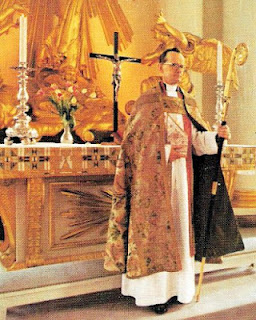
Bo Giertz

Bo Harald Giertz was born 31 August 1905 in Räpplinge, Borgholm, Öland (Kalmar), Sweden. He came from a prominent family and his father was a noted surgeon and head of one of Sweden's largest hospitals He was also an atheist. Bo planned to follow in his father's path and in 1924 he enrolled in the School of Medicine at the University of Uppsala. While there, however, theological students began challenging his belief system and, by the guidance of the Holy Spirit, he came to faith in Jesus Christ, left the school of medicine, and entered the University School of Theology.

In 1934, Giertz was ordained in the Linkoping Cathedral. He became assistant to the bishop and was given responsibility for working with the youth. His own faith and his conviction concerning the relevance of Christianity were on display for the thousands of young people who came under his care. Even as orthodox Lutherans lauded him, he also drew attacks from moderninsts in the Swedish state church and secularists as his writings spread in newspapers and periodicals. The public knew him as a talented and faithful confessor of a Church doctrine that was based in Scripture, confessed in the Creeds, and expounded in the Lutheran Confessions.

Giertz became a priest in Torpa in 1938, serving that parish until 1949, when he was consecrated as Bishop of Gothenburg. While serving Torpa, he wrote With My Own Eyes, a retelling of the Gospels (1947), four theological works, Christ's Church (1939), Church Piety (1939), The Great Lie and the Great Truth (1945), and The Battle for Man (1946), the catechetical book The Foundation (1942), and two novels The Hammer of God (1941) and Faith Alone (1943). These latter, particularly Hammer of God, became popular throughout Scandinavia and then around the globe.

The attention to theology and care for souls that Giertz evidenced in Torpa continued when he became Bishop of Gothenburg in 1949. As the youngest man elected and consecrated to serve the Church of Sweden as a diocesan bishop, he combined a somewhat pietistic type of pastoral care with High Church Lutheran theology, traits that are noticeable in his novels. Following the decisions of the Swedish Parliament and the Church Assembly to ordain women in the Church of Sweden (1958), Giertz became a leader of the opposition. In that same year, he invited all confessional groups in the Church of Sweden to form The Church Movement for Bible and Confession in response to the Assembly's decision.
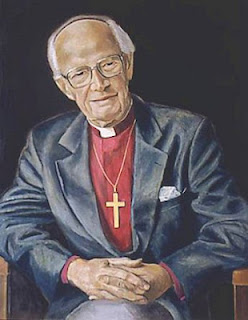
Bishop Bo Giertz

The demands of the bishopric and the challenges of women's ordination and modernist theology slowed his writing for a time but once he became Bishop Emeritus, Giertz returned to the printed word in full force. He wrote The ABCs of Our Christian Faith in 1971, following it with The Knights of Rhodos (1972), another best-selling novel, the devotional books To Believe in Christ (1973) and To Live with Christ (1974), a new translation of the New Testament with Commentary (1977-1982), and, as a nonagenarian, he wrote The Living God — A Guide to the Christian Faith (1995). Most of Giertz's writings are not now available in English but new translations have begun to appear as the desire to read him grows.

Giertz pioneered a return to every Sunday celebration of the Lord's Supper, something that had largely vanished in the Church of Sweden due to the erosion caused by Pietism and Rationalism. He strongly urged pastors to pray the Daily Offices, something he applied in his own devotional life. Although often rejected by the leaders of the Church of Sweden, Giertz remains popular with true Lutherans in his own country, throughout Scandinavia, and across the world. Of him, the Reverend Hans O. Andrae wrote, "In his vision of the One Holy Christian and Apostolic Church, Giertz integrated a vibrant Evangelical-Lutheran orthodoxy, the Church's traditional liturgy, and sincere church piety into a harmonious and powerful wholeness."

Suggested Lection

Psalm 46
Isaiah 55:6-11
Romans 10:5-17
John 15:1-11

Collect

O Lord God, heavenly Father, we pray that, as You raised up Bo Harald Giertz to lead Swedish Lutherans into a renewed appreciation of their confessional heritage and trust in the saving Gospel of Jesus Christ, and as You spoke to the entire Church through his writings, so You would continue to provide faithful pastors and leaders, keep us steadfast in Your grace and truth, defend us against all enemies of Your Word, and bestow on Christ's Church Militant Your saving peace; through Jesus Christ, Your Son, our Lord, who lives and reigns with You and the Holy Spirit, one God, now and forever.


View article...

FW: How Christianity, for awhile, became cool

From Veith and Jenkins…


Feed: Cranach: The Blog of Veith
Posted on: Thursday, July 12, 2012 3:30 AM
Author: Gene Veith
Subject: How Christianity, for awhile, became cool


The 1970s was a time of hippies, free love, psychedelic drugs, and cultural revolution.  But it was also a time of major religious revival, with the "Jesus Movement" gaining headway in that very counter-culture.  How could that be?  Baylor professor Philip Jenkins credits the Byrds, who popularized a recovery of American roots music, much of which is explicitly Christian.  He explains:

At least part of the explanation lies outside the religious realm, in quite secular musical trends of the late 1960s, and the rediscovery of American musical roots — originally, without any religious intent whatever. As a driving force in the new cultural/religious upsurge I would point to one group above all, namely the Byrds. Through the mid-1960s, the Byrds moved ever more deeply into psychedelic experimentation, culminating with the 1968 album The Notorious Byrd Brothers, but at that point, things changed radically. David Crosby left the group, which now added Gram Parsons, with his enduring passion for country and western music. In 1968, the reformed Byrds began recording at Nashville, where they even played the Grand Old Opry. (The audience had no idea what to make of them).

In August 1968, the Byrds released the album Sweetheart of the Rodeo, which pioneered a new style of country rock. It also initiated a revolutionary change in the country music world, which was at the time very conservative musically and politically, and where long hair was strictly taboo. (Merle Haggard's Okie From Muskogee became a huge hit the following year, and a confrontational conservative anthem). At first, country listeners assumed Sweetheart was meant as a mocking retro parody, while the rock audience was bemused. Over the next few years, though, the two genres increasingly coalesced, with all sorts of fusion styles inbetween — country rock, Southern rock, outlaw country, and the rest. (John Spong recently published a terrific history of this synthesis as it developed through the 1970s in Texas Monthly, but subscription is required).

Suddenly and shockingly, "country" culture became fashionable, as part of the Southernization that historian Bruce Shulman described as one of the key social trends sweeping America in the 1970s. This shift was greatly strengthened by the demographic and economic trends of these years, and the shift of wealth and population from Rustbelt to Sunbelt states.

Quite unintentionally, the Byrds also revived and legitimized Christian themes in music for an audience wholly unaccustomed to them. If you want to revive America's roots music, it's hard to do so without incorporating hymns, gospel and Christian songs, and Sweetheart of the Rodeo featured such evocative classics as I am a Pilgrim and The Christian Life.

In 1969, they recorded the Art Reynolds Singers song "Jesus is Just Alright with Me," which became an anthem for the emerging Jesus People. Plenty of other artists jumped on the bandwagon, recording or adapting Christian roots — and that is quite distinct from the contemporary emergence of avowedly Christian contemporary music. (Christian rock largely dates from Larry Norman's 1969 album Upon This Rock). The language of pilgrimage, redemption and sin entered rock music, as did Satan himself: in 1970, the Grateful Dead issued Friend of the Devil.

Suddenly, young people who knew nothing whatever about the American religious heritage were exposed to this music, in highly accessible rock/country fusion styles, played by hip musicians with long hair and beards. Along the way, they also heard key evangelical messages, which suddenly became cool and contemporary.

And that, I suggest, is a major reason why those Christian movements were suddenly able to find young audiences open and receptive to their messages.

via RealClearReligion – When Evangelicals Were Cool.

I love the Byrds!  I heard them play.  I do remember marveling at all of the Christian references I was hearing in their music and in other albums of that day.

And yet, I'm not sure I'm convinced by this analysis.  Why did those old hymns and gospel songs resonate with people like Gram Parsons and record-buyers the way they did?

I think a better explanation is that where sin abounds, grace breaks in.  Which means that we may be in for another spiritual awakening soon.

But this gives me the excuse to post some Byrds music. ("Jesus is Just All Right With Me" comes from 1970, though there is nothing particularly rootsy about it. Gram Parsons joined the group in 1968, but the far better "Turn, Turn, Turn"–a setting of Ecclesiastes 3:1-8 by Pete Seeger–came out in 1965. This YouTube version is stellar, but it is more recent, from 1990.)

UPDATE:  Thanks to SK Peterson for bringing up this STUNNING song by Gram Parsons (with harmony by co-writer Emmylou Harris AND Linda Rondstadt):  "In My Hour of Darkness."  This is what the original article is talking about, not just with the coolness factor (though the accompanying pictures of these three performers are very, very cool) but with the way Parsons is taking that old-time gospel hymn structure and using it in a highly personal and expressive way.  (I think we will all need to purchase the two-album set GP / Grievous Angel.)

I would add that the difference between this and what passes for most contemporary Christian music in the pop vein, in addition to facing up to "darkness," is that Parsons is drawing on the past, on the Christian musical tradition, rather than repudiating it.


View article...

Wednesday, July 11, 2012

FW: Worship Planner: Series C 2013 is Available — Order Now Because Quantities are Limited

Have you used your current edition of the Worship Planner as much as we have?


Feed: Cyberbrethren Lutheran Blog Feed
Posted on: Wednesday, July 11, 2012 2:01 PM
Author: Paul T. McCain
Subject: Worship Planner: Series C 2013 is Available — Order Now Because Quantities are Limited


I've had a lot of people asking me when the Worship Planner for Series C, 2013 will be available. Well, it is now. Just came in from the printer. Please let me underscore how important it is for you to purchase your copies now, before we run out of stock. This is not the kind of resource we want to have excessive inventory for, since it is dated material. So, he who hesitates is lost! Be sure to order enough copies for your: pastor, church office, musicians, etc. etc.

Order here. You can take a look at a sample from the planner, by clicking on this link.


View article...

Enclosures:

992272.pdf (286 KB)
http://www.cph.org/pdf/992272.pdf