!
Feed: Cyberbrethren Lutheran Blog Feed
Posted on: Wednesday, February 20, 2013 8:42 AM
Author: Paul T. McCain
Subject: The Solution to Liturgical Confusion and Controversy: Use the Hymnal
|
!
Feed: Cyberbrethren Lutheran Blog Feed
Posted on: Wednesday, February 20, 2013 8:42 AM
Author: Paul T. McCain
Subject: The Solution to Liturgical Confusion and Controversy: Use the Hymnal
|
Kenya…
Feed: Witness, Mercy, Life Together.
Posted on: Sunday, February 17, 2013 1:36 PM
Author: Al Collver
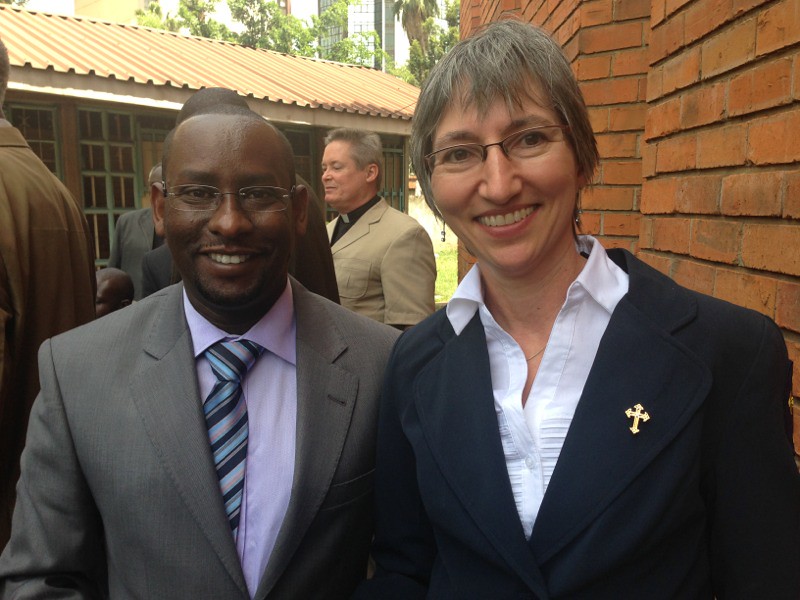
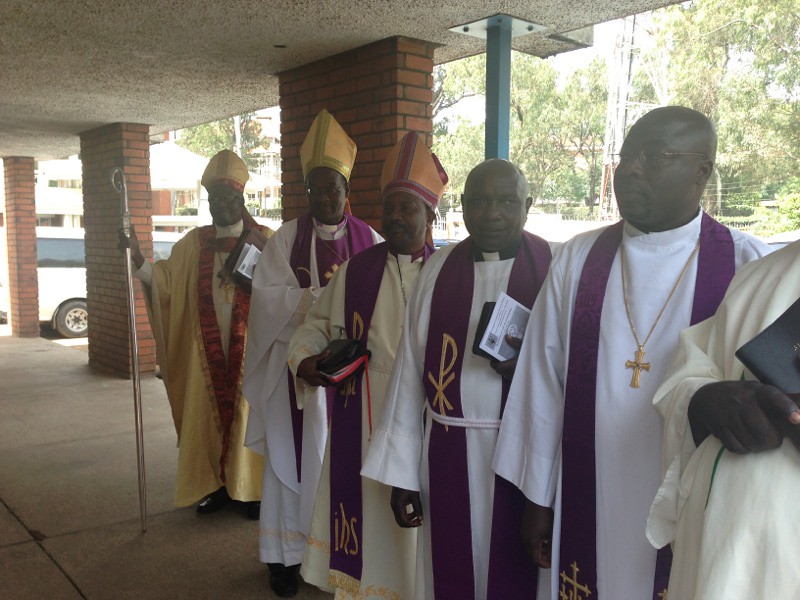
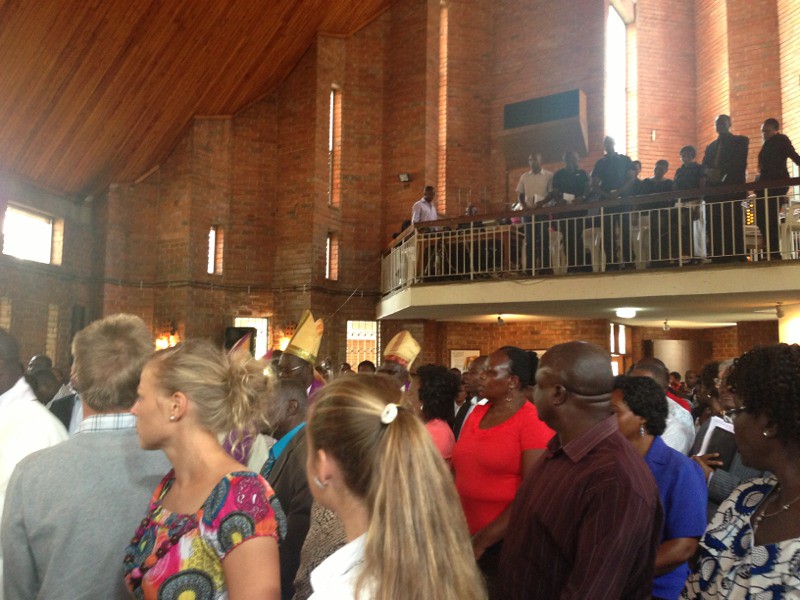
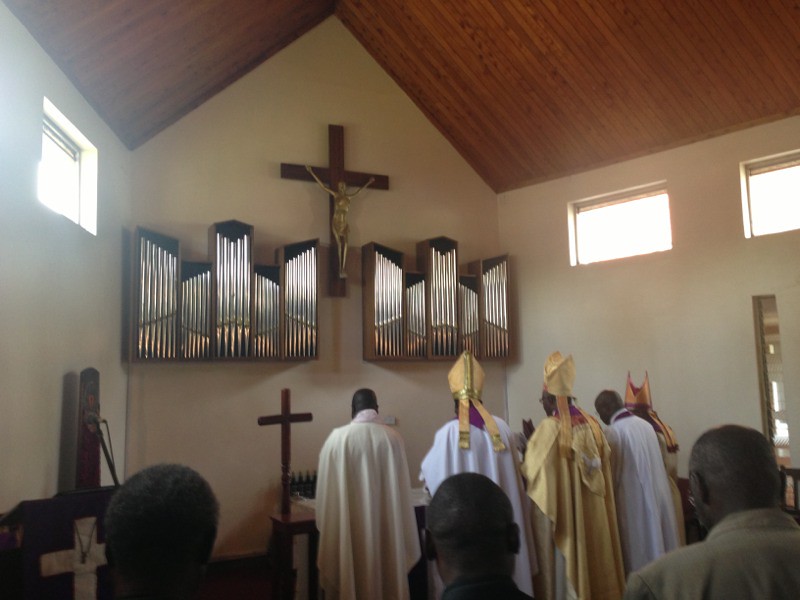
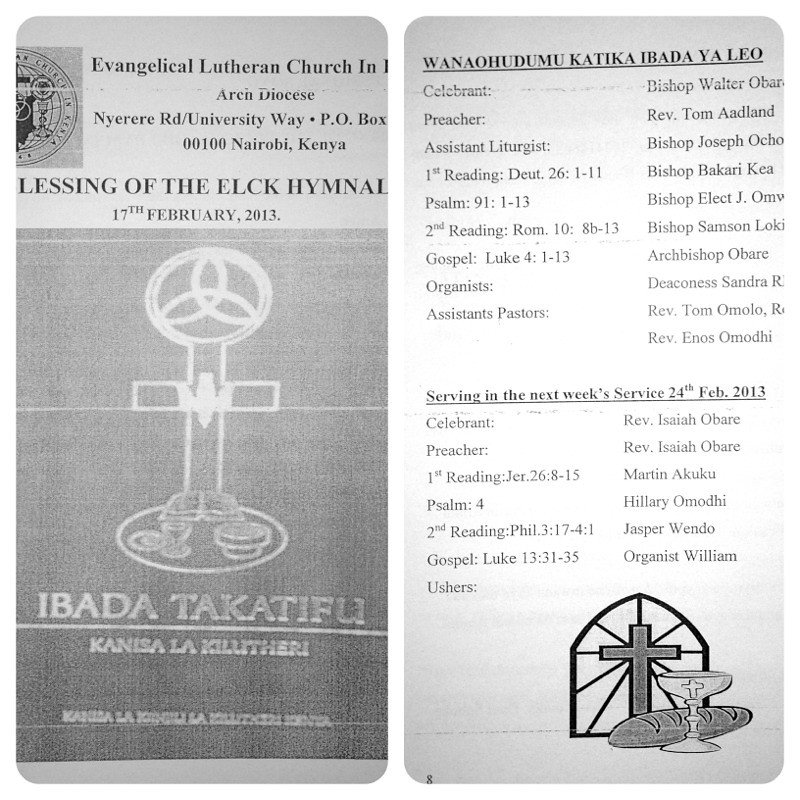
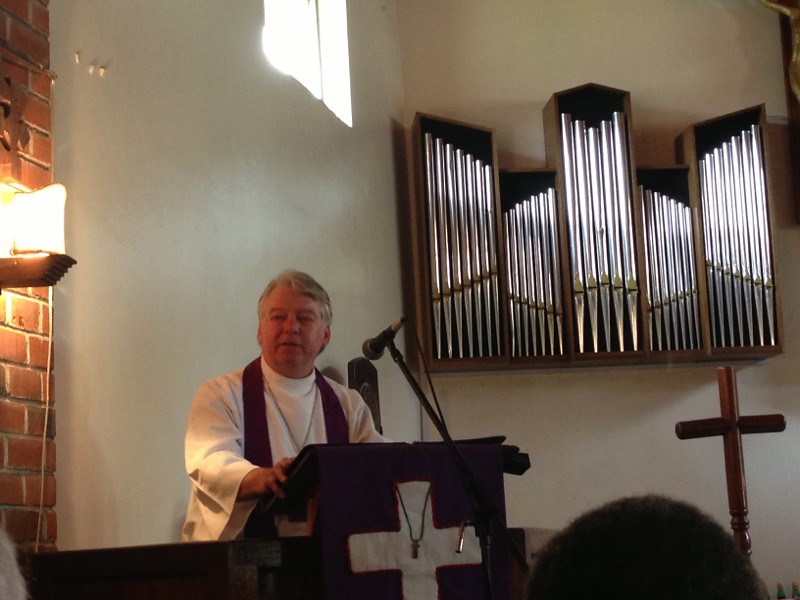
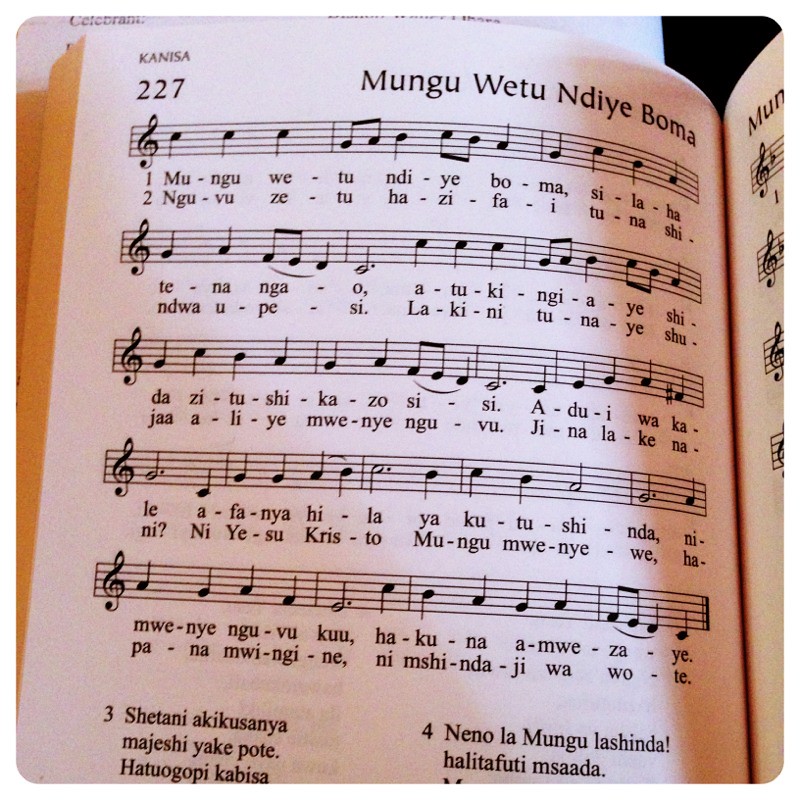
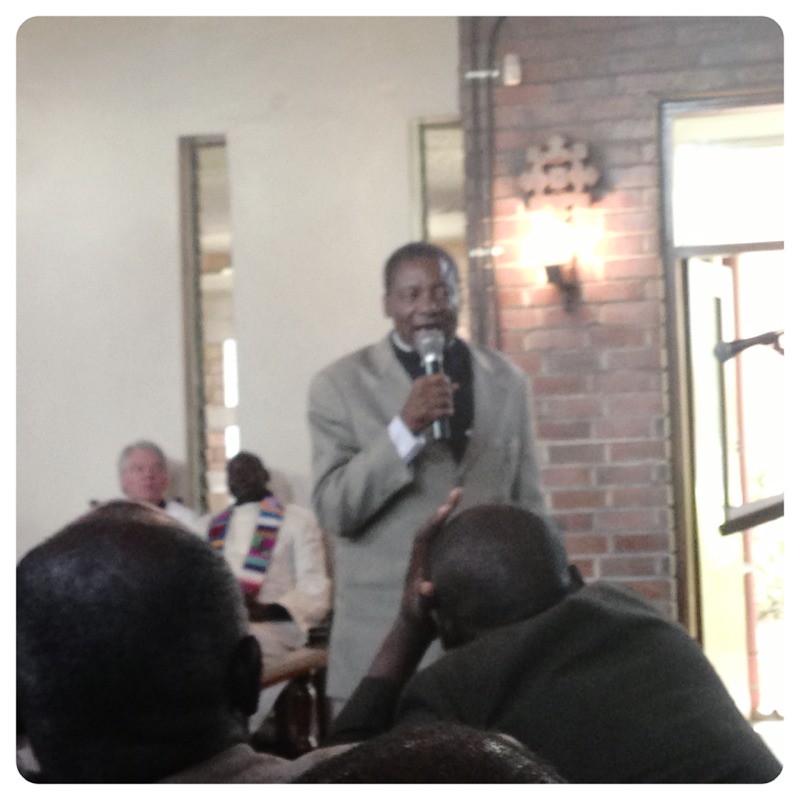
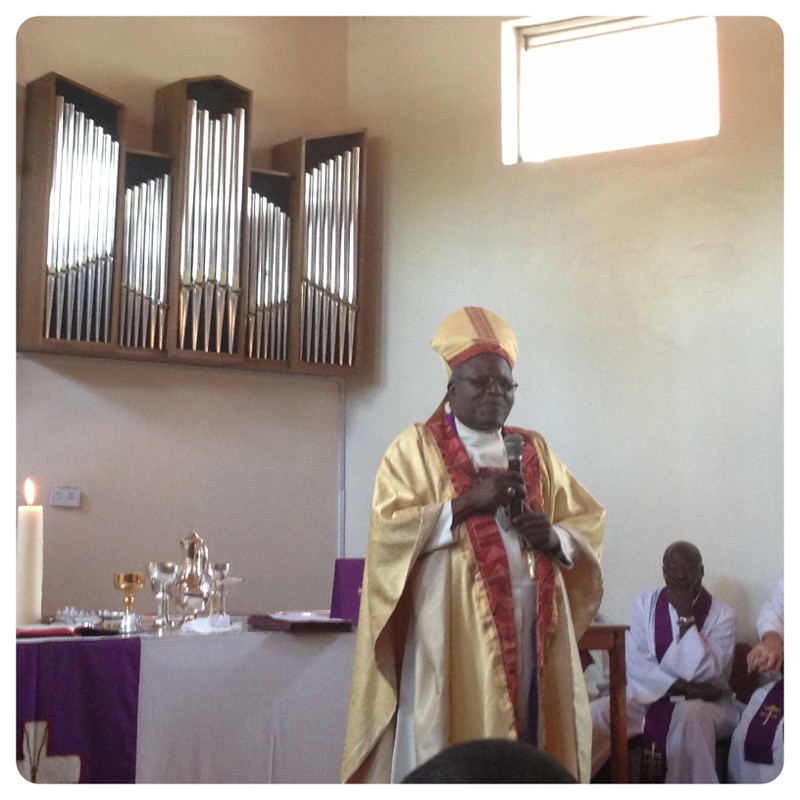
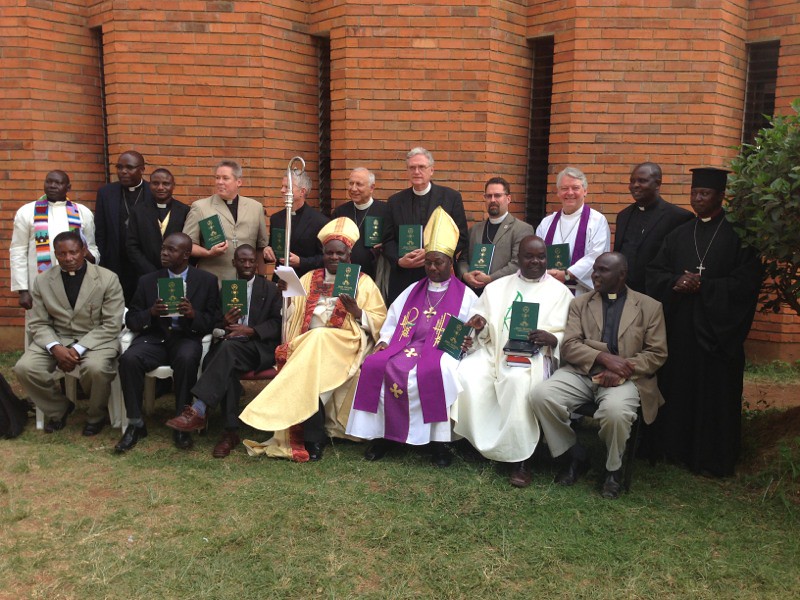
Subject: Dedication of Kenyan Hymnal "Ibata Takatifu"
The hymnal is, in some ways, modeled after the Lutheran Service Book (LSB) in style. The hymnal contains a fresh translation of Luther's Small Catechism in Swahili. At least for the ELCK, the version of the Small Catechism found in the hymnal will become the new standard for Kenya.
Congratulations to the Evangelical Lutheran Church of Kenya's (ELCK) on their new hymnal. To God be the glory. - Posted by Rev. Dr. Albert Collver, Director of Church Relations. - Posted using BlogPress from my iPhone Location:University Way,Nairobi,Kenya |
Fisk…
Feed: Uploads by Jonathan Fisk
Posted on: Friday, February 15, 2013 10:19 AM
Author: Jonathan Fisk
Subject: The State of the Unionism
|
Choice…
Feed: Gottesdienst Online
Posted on: Friday, February 15, 2013 9:38 AM
Author: Pr. H. R.
Subject: What De Servo Arbitrio does and does not mean
I am very excited for the Gerhard volumne on free choice and free will to come out. There is perhaps no more misunderstood work of Luther today than his seminal De Servo Arbitrio. Even the translation is wrong: that's "bound choice [arbitrium]" not "bound will [voluntas]." One of the most egregious errors in Lutheranism today is a creeping antinomianism painted up to look like Luther's bound choice. This caricature of Lutheran teaching is just what the Papal party criticized the Lutherans for: a doctrine that would make a mockery of any attempt at good living, a theological excuse for the complete destruction of moral order in society and of all bounds in theology. (Would the ELCA's Sexual Committee and the LWF's caucus of female bishops please pick up the white phone in concourse B?) But that was always a wicked calumny. Lutherans never taught that individual external sins were inevitable, even among the unregenerate. There is a point to laws against murder or adultery or theft or any other law of external order in society and Biblical laws for the life of Christians - because human beings really do have the choice to avoid those external sins. "The devil, or my fallen nature made me do it" is not a valid defense. Here's a sample paragraph from Gerhard: From ch. 13 to the end of the book [Bellarmine] speaks about "free choice in moral matters" and tries to prove that "as far as moral matters are concerned man has been endowed with free choice in the corrupted state of his nature," but he does not set forth the actual status of the question and controversy distinctly and clearly enough, for we concede that unregenerate man does have some freedom to do the external works of the Law and that, consequently, in the sins which militate against exterior discipline there is no necessity of either compulsion or immutability. |
Veith…
Feed: Crossway Blog
Posted on: Friday, February 15, 2013 7:32 AM
Author: Crossway Author
Subject: Rebooting "Reading Between the Lines"
A number of years ago, after a speaking engagement, a young man of around 10 years old, wearing a white shirt and tie, came up to me. "Sir," he said, as he shook my hand, exuding impeccable manners, "I just wanted to say how much I liked your book." My book? I had written quite a few, but I couldn't think of any aimed at 10-year-olds. I asked him, "What book?" He replied as if it were obvious, "Reading between the Lines!" It turns out my "Christian Guide to Literature," as it was subtitled, was made part of his homeschool curriculum. Not knowing much at the time about homeschooling, I was still astonished. I wrote the book with my college students in mind, but that experience kept repeating itself, and I treasured the thought that homeschoolers were using my book and that my young readers were not only understanding it but liking it. I was teaching students whom I had never met, many of a younger age than I realized and many, as I heard later, of an older age who were just discovering literature as adults. Since what I had to say was written down in a book, it could take on a life of its own beyond the life and limits of its author. Which was one of my points about literature. Marvin Olasky was editing a series of books relating Christianity to various fields, which would become Crossway's Turning Point Series. He asked me to write one about literature. I had already done some writing about Christianity and the arts and Christianity and culture. But literature was my real specialty and teaching literature as an English professor was my day job. So I threw myself into the task. Though I had published some academic scholarship in the field, I knew this book needed to be cast for a broader audience. At the same time, I didn't want it to be simplistic and elementary. I wanted to put down what I had learned myself, not only about but from literature, and to express some of the insights I had discovered about literary art and its relationship to God's design. The book, which came out in 1990, is sort of a distillation of my teaching, my research, and my theories about literature. Here I explore the nature of comedy (in the medieval sense of a story that begins in pain but ends in joy) and of tragedy (in both the medieval sense of a story that begins in joy and ends in pain and in the classical sense of the fall of a noble hero because of hamartia, a word that critics translate as "tragic flaw" but that is simply the New Testament word for "sin"). Here I delve into different modes of literature, such as realism and fantasy, discussing why Christian authors have so often favored fantasy. I try to explain how to read poetry, which I define as literature written in lines, and I defend fiction from the charge that it isn't true. Helping me with that last point was Sir Phillip Sydney, and I draw on, introduce, and elucidate lots and lots of great authors, whom I try to help my readers befriend. I think the book—my wife came up with the title—bears up pretty well after all these years. I appreciate Crossway re-booting it with a fresh design and bringing it into the 21st century. There are, of course, other issues that have come up in literary studies since I wrote the book, and there are new writers, Christian and otherwise, that would deserve mention if I were writing it today. But this book still reflects my approach to literature. In fact, if my college students today wanted to understand more fully what I'm talking about in class—say, in studying for a final, making up for a class they missed, or making sense of a lecture—they could read this book. That might give them an unfair advantage, so I won't tell them of that option. I'm assuming they won't be reading this blog. Then again, they might already have read the thing when they were 10. Gene Edward Veith Jr. (PhD, University of Kansas) is provost and professor of literature at Patrick Henry College and the director of the Cranach Institute at Concordia Theological Seminary. He has been a columnist for World magazine and TableTalk, and is the author of a number of noted books on Christianity and culture, including God at Work. |
!!!
Feed: Cyberbrethren Lutheran Blog Feed
Posted on: Thursday, February 14, 2013 12:33 PM
Author: Paul T. McCain
Subject: The Concordia Triglotta is On Its Way Back Into Print
In a remarkable come-back, the Concordia Triglotta is making is debut in print again. This old classic work, providing the text of the Lutheran Confessions in Latin, German and English, has been out of print for quite some time. Used copies are sold starting at $150 and I've seen them go for much as $280. There is no other easily accessible source of obtaining a copy of the actual texts in the Book of Concord in German, according to the authoritative 1580 first-edition, and in Latin, according to the 1584 authoritative first-edition. The English translation was prepared and published around 1921. The newest edition of the Book of Concord, the Concordia edition, provides an English text based on the English translation of the Triglotta. We finally were able to locate a print-on-demand vendor able to produce a book this size, in a hardback binding. So, stay tuned, It will be out in time to celebrate Saint Patrick's day as part of CPH's "Concordia On Demand" program. The price of the "new" printing of the Triglotta will be $69.99. I'll let you know when you can place an order for it. I must say, as an Irish Lutheran Pastor and Publisher, I'm enjoying this perhaps a wee too much! Here's a little teaser-trailer. |
Consider…
Feed: Steadfast Lutherans
Posted on: Wednesday, February 13, 2013 10:00 AM
Author: Pastor Sam Schuldheisz
Subject: Article Review: Top 10 Reasons Our Kids Leave Church
This catchy title piqued my attention on Facebook recently. I wasn't sure what to expect from this blog post. I found – to my delight – some candid observations about the way Christians minister to youth in the church. This article is well worth reading, whether you have kids or not. I'm thankful the author wrote this article. He wrote down many things I've thought about over the last few years. Sadly, I don't know much about him, only that his name is Marc and he has a blog titled, marc5solas, and that he comes from an American Evangelical background. To get the full article, click here. So, here's a summary of his argument, some selected quotations in italics and a little bit of my own commentary in regular type-face. "The facts: The statistics are jaw-droppingly horrific: 70% of youth stop attending church when they graduate from High School. Nearly a decade later, about half return to church. Half. Let that sink in. There's no easy way to say this: The American Evangelical church has lost, is losing, and will almost certainly continue to lose OUR YOUTH. For all the talk of "our greatest resource", "our treasure", and the multi-million dollar Dave and Buster's/Starbucks knockoffs we build and fill with black walls and wailing rock bands… the church has failed them. Miserably." Much the same could be said of the youth within the Lutheran Church no matter what the denomination. A simple indicator of a local congregation's commitment to its youth is found, at least in part, in the percentage of the budget allotted for "youth work". Where our treasure is, there are heart is also. Of course, money isn't the primary problem. Application of funds is also vital. What's more, the substance of care and catechesis of our youth is what we ought to focus on first and foremost. "10. The Church is "Relevant": You didn't misread that, I didn't say irrelevant, I said RELEVANT. We've taken a historic, 2,000 year old faith, dressed it in plaid and skinny jeans and tried to sell it as "cool" to our kids. It's not cool. It's not modern. What we're packaging is a cheap knockoff of the world we're called to evangelize. As the quote says, 'When the ship is in the ocean, everything's fine. When the ocean gets into the ship, you're in trouble.'" For decades, American Christianity – and youth work in particular – has been amusing itself to death. When Christians attempt to make the Church, in both doctrine and practice, relevant in the eyes of the culture, the church repeatedly shows herself to be irrelevant. Relevance is never good enough. There's always something newer, shinier, and more glorious. Eventually the panacea turns out to be the poison. The church's obsession with being relevant is a never-ending process of increasingly limited returns. As C.S. Lewis writes in The Screwtape Letters. "My dear Wormwood…work on their horror of the Same Old Thing. The horror of the Same Old Thing is one of the most valuable passions we have produced in the human heart – an endless source of heresies in religion…" (C.S. Lewis, The Screwtape Letters, Letter 25, p. 116). When a Lutheran congregation changes their worship practices to become more like the Methodist, Evangelical, or Baptist church down the street they abandon the very things that sets Lutherans apart. Why should anyone – let alone the youth – come to a church that looks just like the mega-church across town that does it bigger and better, or worse yet, any church at all? What sets Lutherans apart from the world at that point? Lutherans worship the way we do because we believe, teach and confess the things we do. All the more reason to teach our youth what we believe and why. " 9. They never attended church to begin with:" Everything done (or not done) in the church's worship confesses something. So, when we send our children out for part (or all) of the service, over the course of a few years, we have successfully communicated to them that what is going on in the Divine Service isn't for them; they need something different. And if they ever do come into church they're lost because they never learned what was going on in the first place. As Marc notes, "They've never sat on a pew between a set of new parents with a fussy baby and a senior citizen on an oxygen tank. They don't see the full timeline of the gospel for every season of life. Instead, we've dumbed down the message, pumped up the volume and act surprised when…." "8. They get smart:" Our youth may appear hidden behind their iPhones and video games. But I've listened to these kids' conversations and questions. And behind their youthful shyness they possess an intelligence adults take for granted. Although plenty of atheists and false teachers haven't. While we're busy cooking up the next great youth strategy or trying to figure out what the kids think is cool these days, they're asking tough, skeptical questions. However, Marc observes, "7. You sent them out unarmed: We've jettisoned catechesis, sold them on "deeds not creeds" and encouraged them to start the quest to find "God's plan for their life". When it comes to armaments in the Christian education fight, Lutherans have the three best weapons: the Scriptures, the hymnal, and our Lutheran Confessions. I know our youth around Redeemer regularly study these, along with Christian apologetics. It's important to know what you believe and why you believe it. Rather than dumbing or watering down our teaching for the youth, let's give them a faith that they can grow into, not out of. That way, when skeptical wolfs come knocking, they won't be living in a house made of straw. "6. You gave them hand-me-downs" "You've tried your best to pass along the internal/subjective faith that you "feel". You really, really, really want them to "feel" it too. But we've never been called to evangelize our feelings. You can't hand down this type of subjective faith. With nothing solid to hang their faith upon, with no historic creed to tie them to centuries of history, without the physical elements of bread, wine, and water, their faith is in their subjective feelings, and when faced with other ways to "feel" uplifted at college, the church loses out to things with much greater appeal to our human nature. And they find it in…" "5. Community" This word is everywhere today. Problem is, no one really knows what it means or, worse yet, everyone has a different definition. Therein lays the problem. When our youth are fed a steady diet of soda-pop worship services and junk-food doctrine, the Christian community (the communion of saints) is easily replaced by any other number of communities willing to cater to their felt needs. "4. They found better feelings:" Emotions are a dangerous, sandy foundation on which to build our children's house of faith; they wax and wane, especially in youth. Feelings can't produce faith; but faith in Christ can produce feelings. Too often the emphasis is on the wrong syllable. "Rather than an external, objective, historical faith, we've given our youth an internal, subjective faith. The evangelical church isn't catechizing or teaching our kids the fundamentals of the faith, we're simply encouraging them to "be nice" and "love Jesus"." "3. They got tired of pretending:" It's hard work being happy 24/7/365. A theology of glory is as emotionally demanding as it is theologically damaging. When Christianity is reduced to a "how-to" book or a list of fill-in-the-blank ways to be a better Christian, it's not long before our youth end up in despair. Why? "2. They know the truth:" "They can't do it. They know it. All that "be nice" moralism they've been taught? The bible has a word for it: Law…There's no rest in this law, only a treadmill of works they know they aren't able to meet. And as a result, Marc concludes his article by saying, "1. They don't need it:" "Our kids are smart. They picked up on the message we unwittingly taught. If church is simply a place to learn life-application principals to achieve a better life in community… you don't need a crucified Jesus for that. Why would they get up early on a Sunday and watch a cheap knockoff of the entertainment venue they went to the night before? The middle-aged pastor trying desperately to be "relevant" to them would be a comical cliché if the effect weren't so devastating. As we jettisoned the gospel, our students are never hit with the full impact of the law, their sin before God, and their desperate need for the atoning work of Christ. Now THAT is relevant, THAT is authentic, and THAT is something the world cannot offer." Instead of approaching the youth with pragmatic, subjective based teaching and worship, let's give them a firm foundation to stand on. This is why our youth group at Redeemer goes to Higher Things conferences and often uses their magazines and videos for bible study. Because the first rule of youth ministry is, there is no youth ministry. I learned this from Pastor George Borghardt at Higher Things. It's the same Law and Gospel Bible study, the same catechism, the same hymns and historic liturgy, the same sacraments administered faithfully to Christ's people of all ages. When we feed our youth the solid doctrine and practice of Lutheran worship and a steady diet of Christian catechesis, the Church can't help but stand out in the culture, and that's a good thing. We're an oasis from the white noise of culture and pop-Christianity. Here we have everything we need to train our youth up in the way they should go – an unchanging Gospel for ever-changing times, a firm foundation in the historic liturgy and Lutheran confessions, the Crucified and Risen Christ present in Word and Sacrament, and people that care about our youth. It's time our youth know about it.
|